When I was working at the radio station(s) KCOR/KQXT right after high school, I started taking classes at the local community college. The station engineer asked me one day if I wanted to make a little extra money working transmitter duty on Sundays. The role required me to have Third Class Radio Telephone license, which I had gotten a few months prior. This license allowed you to control radio and TV transmitters and keep them within license parameters. Basically adjust the power output to keep things legal.
This is, frankly, a perfect job for a student. You only had to take readings at the top of the hour and log them. Making adjustments if need be at the time. Then for the next 50 minutes you had nothing to do really, but study. It worked out great for me.
This was done at the AM transmitter site. I little building with a some huge racks of high power gear and 6 antennas each about 400 feet tall around the building.
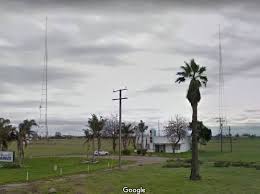
Running out of the building in troughs which were about 7 feet off the ground were the 6 feed lines running out to the antennas. In a side room of the building was a very large diesel generator meant to keep the station on the air in the event of a power failure. We tested the generator once a month.
All went well with this gig until one humid summer day when a very large storm rolled in. When you work in a transmitter building you actually get used to lightning hitting the towers. The spark gap at the bottom of the antenna is there just to handle this and the resulting flash is impressive to say the least.
Behind the building they had built a three sided shed to protect the tractor and other grounds gear used to keep the grass tended. Now you have a mental picture of the location and the stage is set for what happened next.
The wind picked up and things started shaking and vibrating in the storm. I wasn’t worried since I had been through a few similar storms in the past and I knew everything was built to high standards. With the exception of the shed out back. I never really thought about it to be honest.
The transmitters and phasing cabinets ran the middle of the building and you could walk in front of and behind them to work on them as you liked. All the feed lines came out of the final cabinet and ran through a big access box on the back wall of the building into the troughs.
As I said, the wind got really strong and I was hearing noise out back which I hadn’t heard before. I got up to go look and see what was making the noise. I was coming around the equipment racks to the back when I heard a loud crash. The next few seconds seemed to take hours.
Whether you believe in spirits or ghosts is up to you. What I saw may have been my own imagination or it could actually have been my grandfather looking out for me. Either way I had just turned the corner and was looking down the racks when I swear I saw my grandfather who pointed at me and said “RUN!”. Which is exactly what I did.
As I made it back into the main room everything went dark and a huge explosion happened. Dust and burning material filled the air. Then a few seconds later the generator tried to fire up and a second loud bang happened.
Then quiet and dark, except for the storm outside.
What happened was the wind was so strong it blew the roof off the shed which flipped over and landed on the troughs, which crushed them to the ground. This pulled the feed lines out of the phaser cabinet. Now 50,000 watts of energy had nowhere to go and all the power circuits going pack to the transmitter blew up.
Had I not moved when I did the steel door on the back of the phaser cabinet would have crushed me into the back wall. I know this because it took three of us with crow bars to pull the door out of the wall later.
I took the whole engineering team four days to rebuild and get the AM station back on the air.
One question I get is “Did I go back to work in that building ever?”
I did. Since it was a once in a lifetime thing I wasn’t too worried about it happening again.